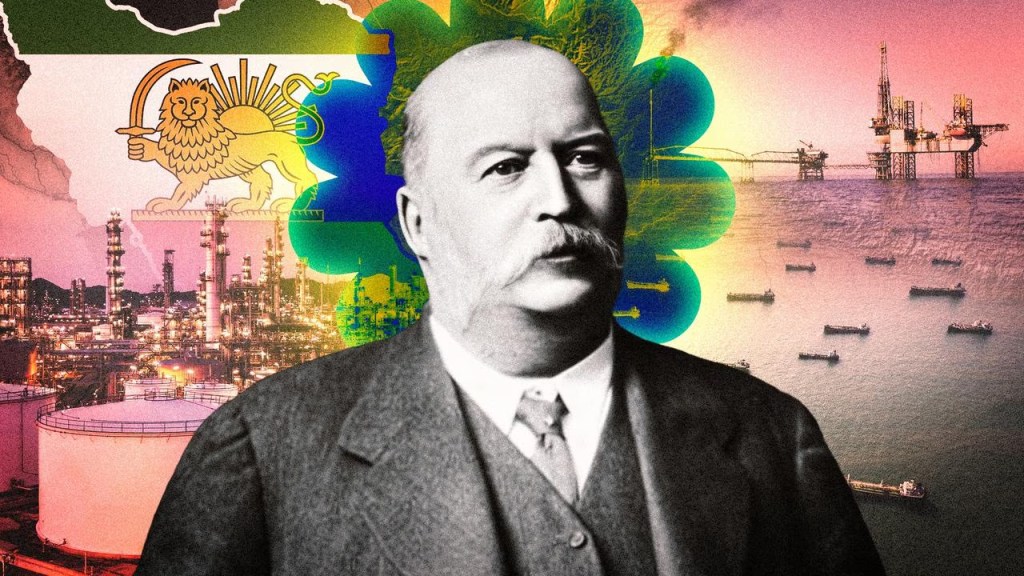
Few of William Knox D’Arcy)s classmates at London’s prestigious Westminster School can have thought that he would go on to have a prominent role in reshaping the world – especially when he did not arrive back for the start of term in September 1866. William’s father had been caught up in some unsavory business in Devon that led to him being declared bankrupt and deciding to move with his family to start a new life in the quiet town of Rockhampton in Queensland, Australia.
His teenage son got on with his studies quietly and diligently enough, qualifying as a lawyer and in due course setting up his own practice. He made a comfortable living and became an upstanding member of the local community, serving on the Rockhampton Jockey Club and indulging in a love for shooting whenever time permitted.
In 1882, William had a stroke of fortune. Three brothers named Morgan had been looking to exploit what they thought was a potentially large gold find at Ironside Mountain, just over twenty miles away from Rockhampton. In search of investment to help them establish a mining operation, they turned to the local bank manager, who in turn pointed them in the direction of William Knox D’Arcy. Intrigued by the possibility of a good return on his capital, Knox D’Arcy formed a syndicate with the bank manager and another mutual friend, and invested in the Morgan brothers’ scheme.
As with all mining operations at their outset, a cool head was needed as an alarming amount of cash was swallowed up in the search for a jackpot. The Morgan brothers soon lost their nerve, rattled by the rate at which their funds were being expended, and sold their interest to the three partners. They sold at the just the wrong moment. The gold deposits at what had been renamed Mount Morgan turned out to be among the richest in history. Shares that had been sold in the business shot up 2,000-fold in value, while over a ten year period the return on the investment was 200,000 per cent. Knox D’Arcy, who controlled more shares than his partners and over a third of the business, went from being a small town lawyer in Australia to one of the richest men in the world.
It was not long before he packed up in Australia and headed for England in triumph. He bought a magnificent town house at 42 Grosvenor Square and a suitably grand estate at Stanmore Hall, just outside London, which he had remodeled and decorated with the finest furnishings money could buy, hiring Morris & Co., the firm set up by William Morris, to take care of the interiors. He commissioned a set of tapestries from Edward Burne-Jones that took four years to weave, such was their quality. Entirely appropriately, they celebrated the quest for the Holy Grail – a suitable cipher for the discovery of incalculable treasure.
Knox D’Arcy knew how to live the good life, renting a fine shooting estate in Norfolk and taking a box by the finishing post at Epsom races. Two drawings in the national portrait gallery capture his character perfectly. One has him sitting back contentedly, with a jovial smile on his face, his generous girth testimony to his enjoyment of fine food and excellent wines; the other has him leaning forward as if to share stories of his business adventures with a friend, champagne glass in front of him, cigarette in hand…
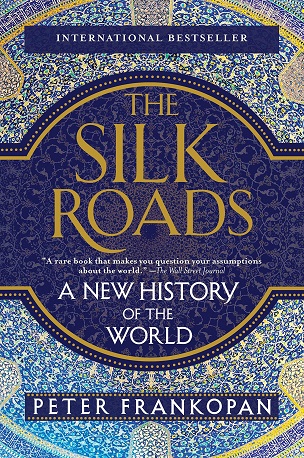
Taken from a chapter of ‘The Silk Roads, A New History Of The World’, written by Oxford Historian Peter Frankopan.
*This is a most excellent true story from history which surely teaches us the following lesson or at least makes us ponder how crucial it is not to give up at the last moment. When everything seems so dire and uncertain as well as terribly arduous, we might just be at the last hurdle. Sweet success could be waiting around the corner. The Morgan brothers surely never lived this one down, the unfortunate fellows.
Ben Anson, The History Scrutineer.

 The History Scrutineer
Leave a comment