
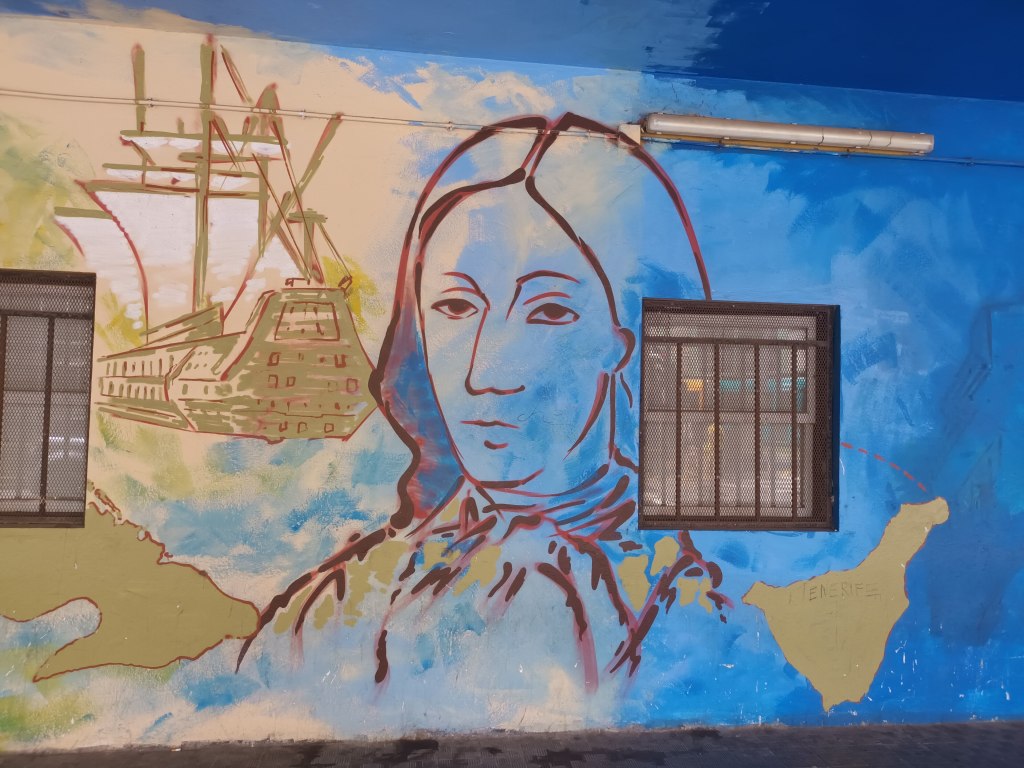
During his lifetime, Amaro Pargo stood out for his bravery and skill in navigation and naval combat, significantly reducing the threat of piracy in his region through strategic alliances and decisive military action. His reputation as a corsair was accompanied by considerable wealth, accumulated through both his commercial and privateering activities. In addition, Pargo was a man of deep religious convictions and a committed benefactor to his community, supporting families in need and participating in charitable works, which adds a humanitarian dimension to his figure. He is surrounded by legends and myths, most notably the supposed existence of a hidden treasure, which has fueled popular imagination and contributed to the construction of his romantic and emblematic image. Despite these legends, his legacy is grounded in historical facts and documentation that reflect his importance in the fight against piracy and his role in 18th-century maritime trade.
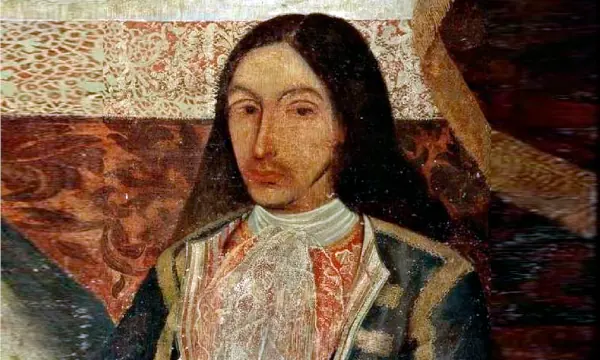
Detail of the painting “Christ of Humility and Patience” in the Hermitage of Our Lady of the Rosary, featuring Amaro Pargo
Pargo died in 1747, leaving behind a complex legacy that combines his roles as corsair, merchant, and benefactor. His figure has transcended the historical sphere to become a cultural symbol of Spanish privateering and an emblematic character in the history of the Canary Islands, reflecting both the harshness of maritime life at the time and the values and contradictions of a man who knew how to navigate between law and legend. “His estate was bequeathed, as the records show, to close relatives—mainly nephews—and other trusted individuals, as well as to certain ecclesiastical and charitable institutions. And the corsair Amaro’s treasure would be nothing more than that mythological yearning which, recalling the extraordinary line with which Humphrey Bogart closed ‘The Maltese Falcon’ (1941), would be made of the stuff that dreams are made of,” the authors conclude.

 The History Scrutineer
Leave a comment