
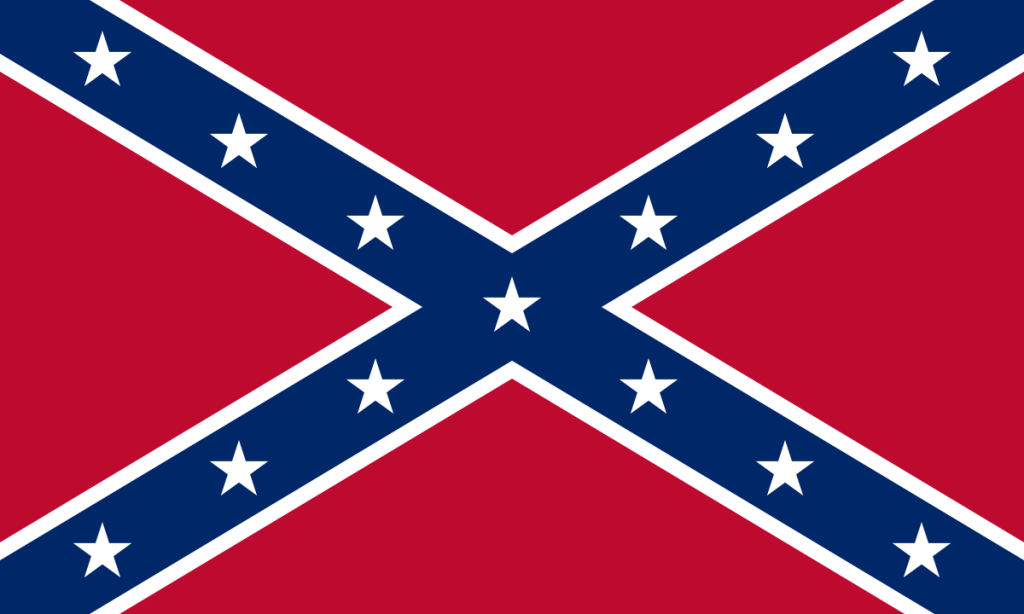
It is estimated that after the horrific American Civil War (1861-1865), up to 20,000 ‘Confederates’ emigrated to Brazil from the US South on being defeated by the northern ‘Union’. It is further estimated that today, roughly 260,000 Brazilians descend from those Confederates, who flocked to the massive South American nation – many even taking ‘their’ African slaves with them.
A Reddit commentator by the title of ‘No-Initiative-7755’ writes: https://www.reddit.com/r/todayilearned/comments/115ijwg/til_its_estimated_that_after_the_civil_war_up_to/
My family ancestor was called Irwin Miller, he immigrated from Eufalia, AL to Brazil along with other confederate families. They founded 2 towns, one right next to each other, Santa Barbara and Americana. 2 Miller families settled there, one was called “Sweet Miller” since they planted sugar cane and the other, “Sour Miller” – they planted something – not sugar cane. Not proud of them being confederates, but proud of them for founding universities(universidade metodista de piracicaba), bringing new innovations in the sugar cana production process to the country, that’s why Brazil is the leader in ethanol. I graduated from law in the university my ancestor founded.
Another commentator – ‘JPMole’ shares:
A very famous singer, nicknamed the Queen of Brazilian Rock, called Rita Lee and she is a descendant of a Confederate family, including “Lee” is a name that the father wanted to register all his daughters, in honor of General Robert E. Lee , of the US Confederate Army.

Confederados is the Brazilian name for the Confederate expatriates, all caucasian southerners (along with their African slaves), who fled the Southern United States during ‘reconstruction’, and their Brazilian descendants. They were enticed to Brazil by offers of cheap land from Emperor Dom Pedro II, who had hoped to gain expertise in cotton farming. The regime in Brazil had a number of features which attracted the Confederados, among these political decentralization, and a relatively high commitment to free trade. The continuing legality of slavery (until 1888) was another factor, though few Confederados actually acquired slaves in Brazil.
As previously stated, it is estimated that up to 20,000 American Confederates immigrated to the Empire of Brazil from the Southern United States after the American Civil War. Initially, most settled in the current state of Sao Paulo, where they founded the city of Americana, which was once part of the neighboring city of Santa Barbara D’Oeste. The descendants of other Confederados would later be found throughout Brazil.
The center of Confederado culture is the Campo Cemetery in Santa Barbara D’Oeste, where most of the original Confederados from the region were buried. Because of their Protestant religion, they could not be buried in a Catholic cemetery, so they created their own cemetery, the first non-Catholic, non-indigenous cemetery in Brazil. The Confederado community has also established a Museum of Immigration at Santa Bárbara d’Oeste to present the history of Brazilian immigration and highlight its benefits to the nation.
The descendants still foster a connection with their history through the Fraternity of American Descendants, an organization dedicated to preserving the unique mixed culture. Os Confederados also have an annual festival, called the ‘Festa Confederada’, which is used to fund the Campo Cemetery. The festival is marked by Confederate flags, traditional dress of Confederate uniforms and hoop skirts, food of the American South with a Brazilian flair, and dances and music popular in the American South during the Antebellum period.
Although the amount of Confederado descendants living in Brazil today is difficult to estimate, in 2016 they were believed to number in the thousands.

After the war, many Confederate planters were unwilling to live by the new rules imposed by the Union’s victory and the constitutional changes that followed: an end to chattel slavery, a new labor regime, and the loss of political power that came with African-American suffrage. Accustomed to raising cotton with the labor of enslaved people, some looked elsewhere in the Western Hemisphere for a place where their old life could be continued.
“Many persons who, from long habit and fondly cherished theories, have become strongly attached to the institution of African slavery, fancy that in Brazil they will find an opportunity for the permanent use of that system of labor — Brazil and the Spanish possessions being the only two slaveholding communities remaining in the civilized world,” the New Orleans Daily Picayune wrote in September 1865.
The Brazilian Emperor Dom Pedro II saw an opportunity in the economic disruption in the southern United States and hoped to build up its cotton production for export to the looms of England and France, which had long relied on the Deep South. The Emperor encouraged the immigration of cotton planters from the former Confederacy to enable that expansion.
Whenever man has had his chosen way of life outlawed or challenged, individually or as part of a wider group, man has sought out distant lands where he might be able to continue as he was. Such was the move made by these Confederates when they descended on Brazil.
 The History Scrutineer
Leave a comment